Thursday, April 13, 2017

Rapunzel By: Fred Crump Jr.

Image result for rapunzel fred crump jr 
 
Book Title: Rapunzel

Author: Fred Crump Jr.

Illustrator: Fred Crump Jr.

Genre: Traditional Literalure

Summary: An African take on the traditional story of Rapunzel.

ELA Content Standard 1: Grade 2, Key Ideas and Details #3 - Describe how characters in a story respond to major events and challenges
How it Connects: Students can see how Rapunzel cares fro the prince even though he is a stranger and how the witch reacts to him trying to save the princess.

ELA Content Standard 2: Grade 2, Integration of Knowledge and Ideas #9 - Compare and contrast two or more versions of the same story (e.g., Cinderella stories) by different authors or from different cultures.

How it Connects: Students can use multiple different versions to compare and contrast one Rapunzel from another through cultures,  places, and times.

3 Tiers of  Vocab: 1) flowers, singing 2) tower 3) wicked       

How Children Use Book: Individual and Small Groups

Meets Needs: Gifted students can can go beyond physical differences and look into differences of time periods as well

The Rough-Faced Girl By: Rafe Martin


Image result


Book Title: The Rough-Faced Girl
Author: Rafe Martin
Illustrator: David Shannon
Genre: Traditional Literature
Summary: A young Native American girl who has been tormented by her older sisters, sets out to marry the villages 'invisible being'. Only the girl who has seen him can marry him.
ELA Content Standard 1: Grade 1, Key Ideas and Details #3- Describe characters, settings, and major events in a story, using key details.

How it Connects: Students can write or say things that describe the rough-faced girl before and after she meets the invisible being physically and emotionally and do the same for her older sisters. They can also talk abut where the invisible being was hidden in the pictures.  
ELA Content Standard 2: Grade 2, Craft and Structure #6- Acknowledge differences in the points of view of characters, including by speaking in a different voice for each character when reading dialogue aloud.
How it Connects: Students can tell the tone of the characters and their personalities by the the way dialogue is read, ex: the sisters act and speak in a vain way and the rough-faced girl speaks sweetly.
3 Tiers of  Vocab: 1) plants, animals 2) bow and arrow 3) wigwam
How Children Use Book: Centers
Meets Needs: Gifted students can use this book to learn about why this story might be relevant to native culture

The Princess and the Pea By: Lauren Child

Image result 


Book Title: The Princess and the Pea

Author: Lauren Child

Illustrator: Polly Borland

Genre: Traditional Literature

Summary: A young prince wishes to marry a princess, but not just any princess, she needs to be a real princess. The only way to tell if the girl who comes to the castle one stormy night is a real princess, she must sleep on a pea covered by over 20 mattresses and if she can feel the pea, she is a real princess. 

ELA Content Standard 1: Grade 2, Key Ideas and Details #1- Ask and answer such questions as who, what, where, when, why, and how to demonstrate understanding of key details in a text.

How it Connects: Students can follow along with the story and perform the following task of asking and answeing questions (ex: what was placed under the mattress?, how do we know she is a real princess?)

ELA Content Standard 2: Grade 1, Craft and Structure #6- Distinguish between information provided by pictures or other illustrations and information provided by the words in a text.

How it Connects: Students can use the pictures to infer the text of the story 

3 Tiers of  Vocab: 1) city, real 2) princess 3) thunder, lightning 

How Children Use Book: Individual

Meets Needs: Gifted students can use this to see what would happen to a pea in real life if mattresses were stacked on top of it

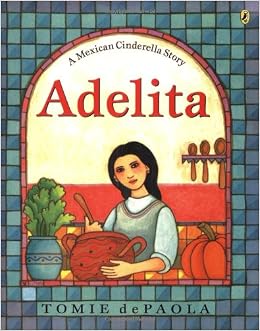
Adelita By: Tomie dePaola

Image result for adelita 


Book Title: Adelita

Author: Tomie dePaola

Illustrator: Tomie dePaola

Genre: Traditional Literature

Summary: A Mexican spin on a traditional Cinderella story

ELA Content Standard 1: Grade 2, Integration of Knowledge and Ideas #8- Compare and contrast the most important points presented by two texts on the same topic.

How it Connects: There are many versions of Cinderella and taking time to go through a few different ones will be beneficial to help the students compare and contrast similarities and differences between texts of the same story line.

ELA Content Standard 2: Grade 2, Key Ideas and Details #2- Recount stories, including fables and folktales from diverse cultures, and determine their central message, lesson, or moral.

How it Connects: This interpretation of Cinderella is culturally diverse with the Mexican influence and tells a central message to not be greedy and to always be kind and work hard to receive good things

3 Tiers of  Vocab: 1) family, party 2) jealous 3) widow

How Children Use Book: Independent and Small Groups 

Meets Needs: ELL, this book has many spanish phrases translated


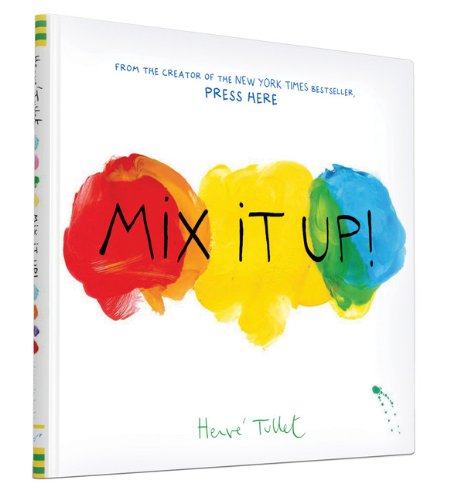
Mix it Up By: Hervé Tullet


 Image result for mix it up book

Book Title: Mix it Up

Author: Hervé Tullet

Illustrator: Hervé Tullet

Genre: Picture Book

Summary: This fun and interactive book lets students explore colors and how some colors mix together to create new ones.

ELA Content Standard 1: Grade 1, Comprehension and Collaboration # 3-  Ask and answer questions about what a speaker says in order to gather additional information or clarify something that is not understood.

How it Connects:Taking directions is a big part of this reading, knowing and understanding the directions of this book will help the reader engage with this story and remember the information.

ELA Content Standard 2: Grade 1, Craft and Structure # 5- Explain major differences between books that tell stories and books that give information, drawing on a wide reading of a range of text types.

How it Connects: This book does not necessarily tell a 'story' with characters and a traditional story line. The students in the read aloud would be the 'characters' and this book is told from a 'breaking the 4th wall' pov. 

3 Tiers of  Vocab: 1) up, it, red 2) left, right, shake 3) gently, touch, remember

How Children Use Book: Individually

Meets Needs: SPED students can use this to see how the colors are made and how they can become lighter and darker

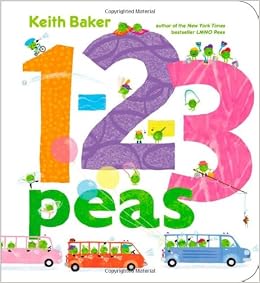
1, 2, 3 Peas By: Keith Baker


 Image result for 1 2 3 peas

Book Title: 1, 2, 3 Peas

Author: Keith Baker

Illustrator: Keith Baker

Genre: Picture Book

Summary: A counting book goes through the numbers 1-10, 11-20, and 30, 40, 50, 60, 70, 80, 90, and 100 using fun green pea characters as individual representations for each number.

ELA Content Standard 1: Kindergarten,  Presentation of Knowledge and Ideas # 5- Add drawings or other visual displays to descriptions as desired to provide additional detail.

How it Connects: Students can create drawings of objects in the amount correctly representing numbers (8 fish, 3 apples, etc) 

ELA Content Standard 2: Kindergarten, Integration of Knowledge and Ideas #7 - With prompting and support, describe the relationship between illustrations and the story in which they appear (e.g., what moment in a story an illustration depicts).

How it Connects: Have students recognize the number of peas corrosponds to the big pictured numbers and have them count along.

3 Tiers of  Vocab: 1) one, two, three 2) look, row, peas, 3) jumping, traveling, building

How Children Use Book: Individual and Small group

Meets Needs: ELL students can spell out the numbers as they go along with each printed number

Eating the Alphabet By: Lois Ehlert


 Image result for eating the alphabet


Book Title: Eating the Alphabet
Author:Lois Ehlert
Illustrator: Lois Ehlert
Genre: Picture Book
Summary: This book goes through each letter of the alphabet using big uppercase and lowercase letters. The pictures are brightly and accurately colored fruits and vegetables that begin with each letter of the alphabet and are clearly labeled in both 'all caps' and all lowercase letters.  
ELA Content Standard 1: Integration of Knowledge and Ideas #7- With prompting and support, describe the relationship between illustrations and the text in which they appear (e.g., what person, place, thing, or idea in the text an illustration depicts).
How it Connects:Children can see the letters and make connections to the fruits and vegetables that go with each letter but recognition and sounding out the words.
ELA Content Standard 2: Range of Reading and Level of Text Complexity #10 - Actively engage in group reading activities with purpose and understanding.
How it Connects: Do a letter of the day and focus on things or fruits and vegetables that go with each specific letter, more interactive, bring in fruits and vegetables to taste with each letter.
3 Tiers of  Vocab: 1) Ac, Bc, Cc 2) apple, banana, 3) kiwi, pear, potato
How Children Use Book: Individual
Meets Needs: ELL students can refer to this as a guide to enhance their reading and/or spelling.